A high-ceiling foyer can make a spectacular first impression – or feel like a beautiful room with its most important detail missing. The right foyer lighting for high ceilings brings the entire space into focus, creating warmth at the door, visual drama overhead, and a polished transition into the rest of the home. For a grand two-story entry, the fixture should not merely fill empty air. It should give the architecture a center of gravity.
Start With Scale, Not Just Style
A small chandelier hanging in a tall foyer rarely looks understated. It looks lost. High ceilings require a fixture with enough height, width, material, and illumination to hold its own against open walls, staircases, oversized doors, and large windows.
Start by measuring the foyer’s width and length in feet, then add those numbers together to estimate an appropriate chandelier diameter in inches. For example, an entry that is 12 feet wide by 14 feet long can often support a fixture around 26 inches wide. That is a useful starting point, not a strict rule. A dramatic spiral chandelier, open-frame lantern, or multi-tier crystal design may need to be larger to achieve the same visual presence.
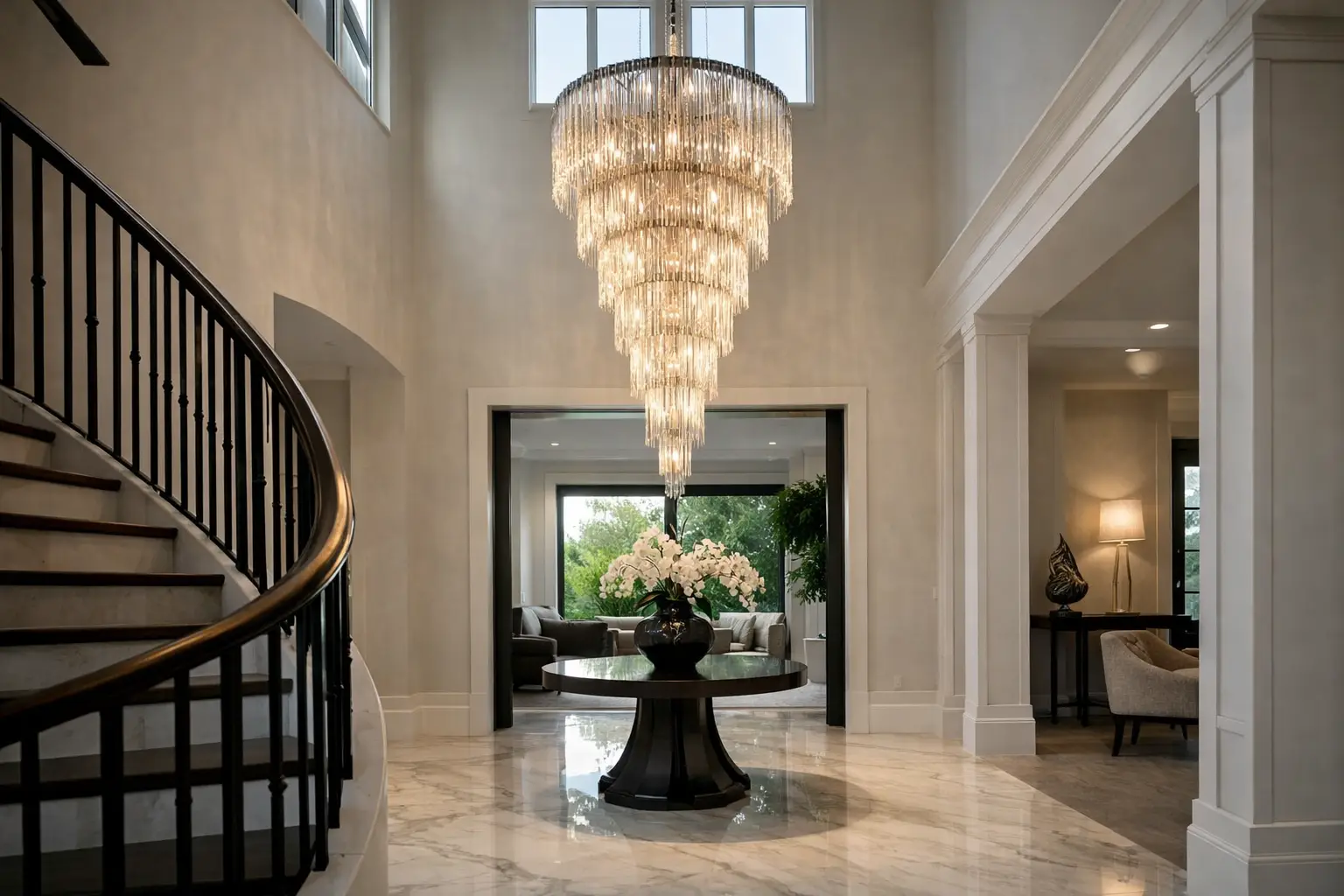
Height matters just as much. In a foyer with a 16- to 20-foot ceiling, a tall fixture is usually more successful than a wide, shallow one. A common guideline is to allow roughly 2.5 to 3 inches of fixture height for every foot of ceiling height. A 20-foot foyer may therefore suit a chandelier around 50 to 60 inches tall, especially when the room has a second-floor overlook.
The goal is proportion, not maximum size. A fixture with a heavy canopy, dense crystal layers, or dark metal framework can feel visually larger than its dimensions suggest. Meanwhile, an airy chandelier with slender arms may need more width or length to make a comparable statement.
Foyer Lighting for High Ceilings Needs the Right Drop
The most common high-ceiling lighting mistake is hanging the chandelier too high. When the fixture sits close to the ceiling, it becomes a ceiling accessory rather than a focal point for the entry.
For most open foyers, the bottom of the chandelier should hang at least 7 feet above the floor. In a two-story foyer, it often looks best when the fixture is centered within the open volume of the room rather than pushed to the top. If there is a second-floor landing, balcony, or window facing the foyer, use those architectural lines as a reference. A chandelier that falls visually near the center of those features usually feels intentional.
There is one important trade-off: a lower drop creates more drama, but it can interrupt sightlines from an upper hallway or make a compact entry feel crowded. If your foyer is narrow, look for vertical fixtures that draw the eye upward without spreading too far across the room. Spiral chandeliers are especially effective here because they use height as part of the design, turning a tall ceiling into a feature rather than a challenge.
Before purchasing, measure from the ceiling junction box to the desired bottom of the fixture. This tells you how much chain, cable, or downrod is needed. Adjustable hanging hardware is valuable because the ideal drop often becomes clearer once the fixture is physically in the room.
Choose a Fixture Shape That Works With Your Architecture
A high ceiling gives you permission to be bolder, but the home’s architecture should still lead the decision. The best foyer chandelier feels connected to the stair railing, front door hardware, flooring, wall color, and furniture nearby.
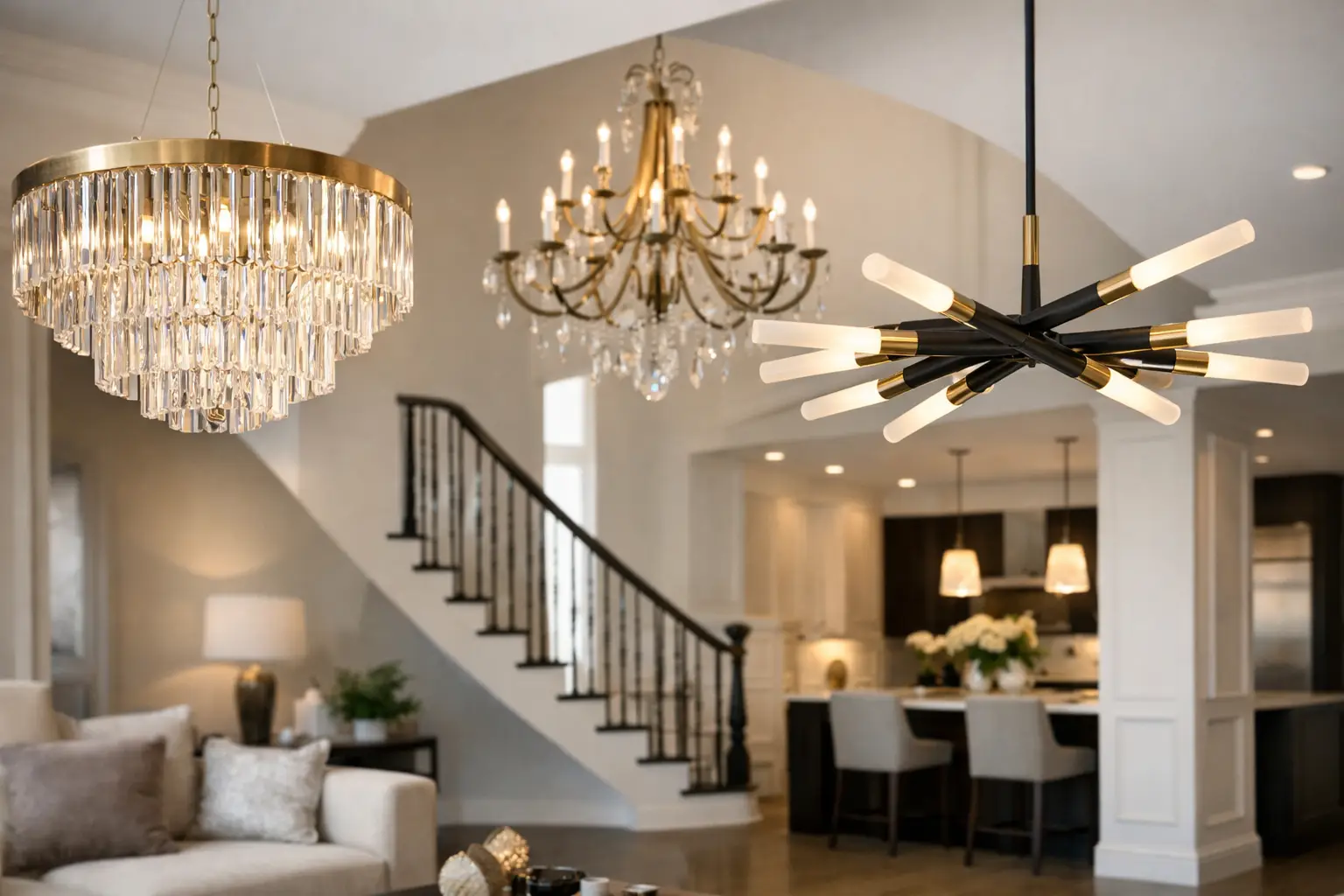
A traditional home with detailed millwork, iron balusters, or a rich wood front door often suits a classic crystal chandelier, a candle-style design, or a lantern foyer light in bronze, black, or antique brass. These styles add elegance without fighting the home’s character.
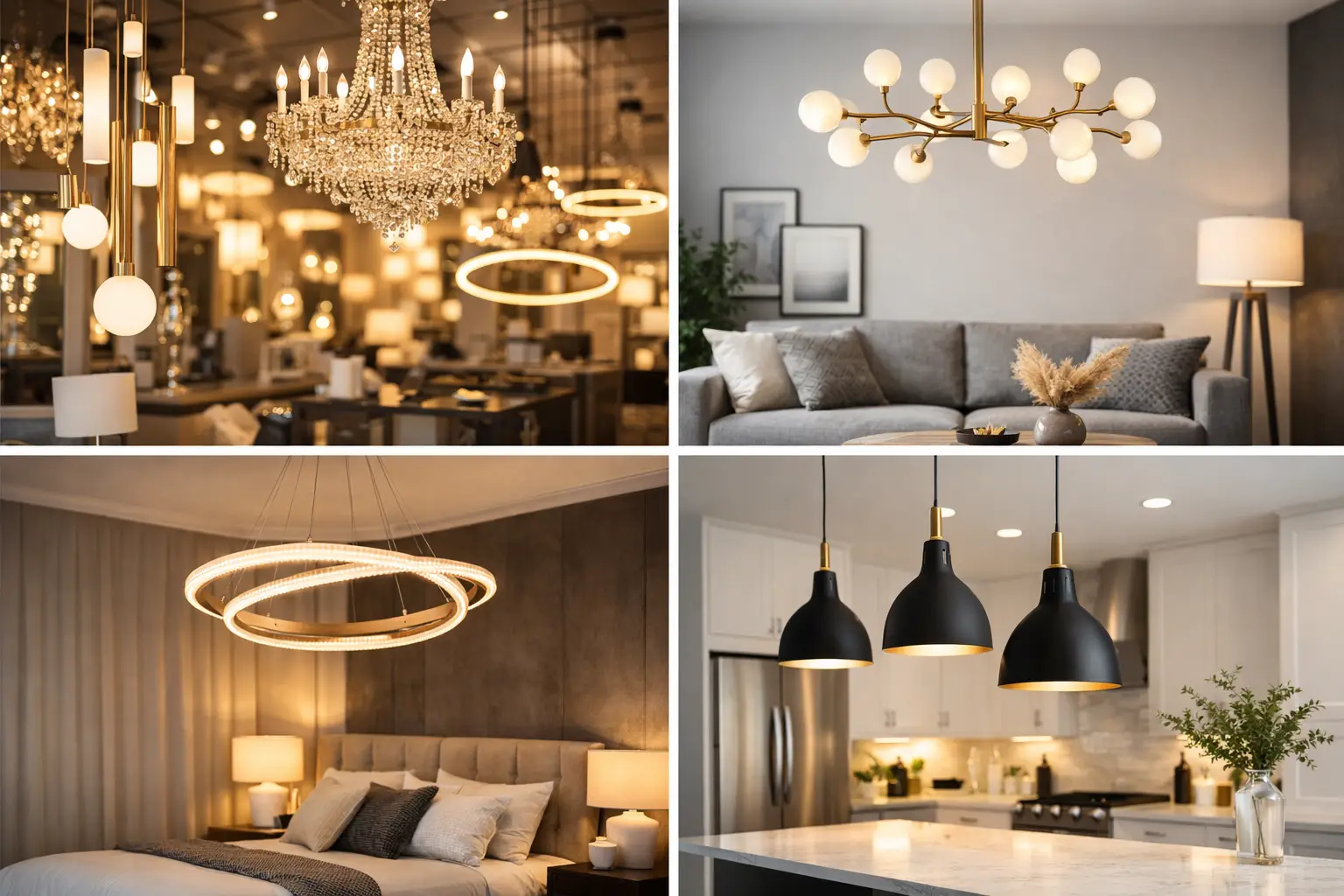
For contemporary interiors, consider clean geometric frames, sculptural LED rings, globe clusters, or a cascading pendant arrangement. Black and gold finishes add contrast and warmth, while polished chrome, brushed nickel, and clear glass can create a brighter, more streamlined look.
Transitional homes have the widest range of options. A modern lantern, soft gold chandelier, or open-frame design with simple lines can bridge traditional architectural details and current furnishings. If the foyer opens directly into a living room or dining area, select finishes that repeat elsewhere. Matching every fixture exactly is not necessary, but the metals and design language should feel related.
Think About Light Quality, Not Only Appearance
A chandelier can be breathtaking in daylight and still leave the entry dim at night. Decorative lighting should create beauty, but a foyer also needs enough light for keys, shoes, stairs, deliveries, and welcoming guests safely.
For a comfortable residential entry, warm white light around 2700K to 3000K usually creates the most inviting effect. It flatters wood, paint colors, and warm metallic finishes while avoiding the harsh blue cast that can make a foyer feel commercial. Dimmable bulbs or integrated dimmable LED fixtures are a smart choice because they allow bright, practical light when needed and a softer glow for evenings or entertaining.
Pay attention to bulb visibility. In a crystal or open-frame chandelier, exposed bulbs are part of the look. Choose clear filament-style LEDs for sparkle, or frosted bulbs when you want a gentler appearance. In a fixture with fabric shades or diffused glass, bulb shape matters less, and the focus shifts to an even, comfortable glow.
A large foyer may also benefit from supporting layers of light. Wall sconces can add warmth along a staircase, while a nearby table lamp creates a softer welcome at floor level. The chandelier remains the star, but layered lighting gives the room dimension and makes the space feel finished.
Match the Fixture to the Staircase and Sightlines
In many GTA homes, the foyer is viewed from several places at once: the front door, the staircase, the upper landing, and an open living area. That means the back of the fixture matters almost as much as the front.
Look for a chandelier with a strong silhouette from every angle. Cascading crystal designs and spiral chandeliers can be exceptional in stairwells and open entries because their form changes as you move through the space. A linear island light may look striking over a kitchen counter but is rarely the right solution for a tall central foyer, where a round or vertical design creates better balance.
If the chandelier hangs near a staircase, make sure it does not visually compete with the railing. Ornate railing and ornate lighting can work together, but they need a shared finish or a clear contrast. For example, black iron railings may pair beautifully with a brass-and-black lantern. A heavily crystal-covered fixture beside elaborate curved railings may feel luxurious, but it needs enough open space around it to avoid visual clutter.
Plan for Installation and Long-Term Care
Large foyer fixtures are not simple weekend swaps. Weight, ceiling height, electrical box support, ladder access, and future bulb replacement all deserve consideration before installation day. A substantial chandelier may require reinforced mounting, and a tall stairwell can call for professional equipment and installation support.
Maintenance should influence the design choice as well. Crystal chandeliers deliver remarkable brilliance, but they require occasional cleaning to keep that sparkle alive. Open-frame lanterns and metal fixtures are typically easier to maintain. Integrated LED designs reduce the need for bulb changes, though the quality of the LED system matters because it is built into the fixture.
Also consider your ceiling shape. Vaulted, sloped, and coffered ceilings may need special adapters, longer downrods, or careful canopy selection. A fixture that looks perfect online can require a different mounting approach in person, which is why accurate measurements and expert guidance are worth having before you order.
Make the Entry Feel Like It Belongs to Your Home
Your foyer sets expectations before anyone reaches the kitchen, living room, or dining table. The lighting should feel confident enough to greet guests, yet personal enough to reflect the people who live there. A glittering chandelier can bring hotel-inspired glamour to a formal entry. A sculptural matte-black fixture can give a new build a sharper, more modern identity. A warm brass lantern can make a family home feel established and welcoming.
At Fehmi Lights, homeowners, renovators, and designers can explore statement chandeliers, spiral designs, foyer lights, sconces, and complementary décor with guidance on scale, finish, and installation needs. Whether you are furnishing in Brampton, Mississauga, Caledon, Vaughan, Toronto, Kitchener, or elsewhere in the Greater Toronto Area, the right fixture is the one that makes you pause at the front door and appreciate the room all over again.